

Meal planning and follow-up
Personalised meal planning and follow-up support
A plan is only useful if you actually follow it, so the drafts built here start from what you already eat. What follows is how an individualni jedilnik is put together, what the follow-up rhythm looks like, and how plans change as you do.
Where a plan actually begins
The first draft is built from your food diary and the intake form, not from a template. If you eat the same three breakfasts on rotation, the plan works with those and adjusts what sits inside them. If you cook for a family, it covers the whole table instead of a separate plate for you.
That route is slower to write and far more likely to survive week three. Plans built from idealised menus look impressive on the page and get abandoned by the fridge.
- Intake
- Food diary, medical notes you choose to share, cooking time, budget, allergies and foods you refuse.
- First draft
- Written by hand from the diary, sent by email after the first session.
- Follow-up
- A short review comparing what was planned with what happened, without judgement.
- Revision
- The plan gets rewritten as your week, your cooking and your appetite change.
Food diary review — what you eat on a normal Tuesday, not on your best day.
IntakeA written plan with ordinary ingredients, portions in household measures, and substitutions where you need them.
PlanShopping notes for the first few weeks, so the ingredients are already in the house when you need them.
KitchenA follow-up where the plan meets the week you actually had, and the next draft is drawn from that.
ReviewMost plan failures are shopping failures rather than motivation failures, which is why the notes come before the resolve does.
What a plan contains
Meals with ordinary ingredients, portions in household measures, and notes on substitutions for foods you dislike or cannot buy nearby. Where it matters, it also covers eating out, work lunches and travel days.
Time and budget
Time is the constraint people mention most, and it is usually real. Plans account for how long you are genuinely willing to cook on a weekday — twenty minutes, not forty. Nothing depends on a specialty product when the supermarket equivalent does the same job.
Fixed parameters
Allergies, religious restrictions and foods you simply refuse to eat are treated as fixed. They are the shape the plan is built around, not obstacles to negotiate at session two.
Sitting down with last week
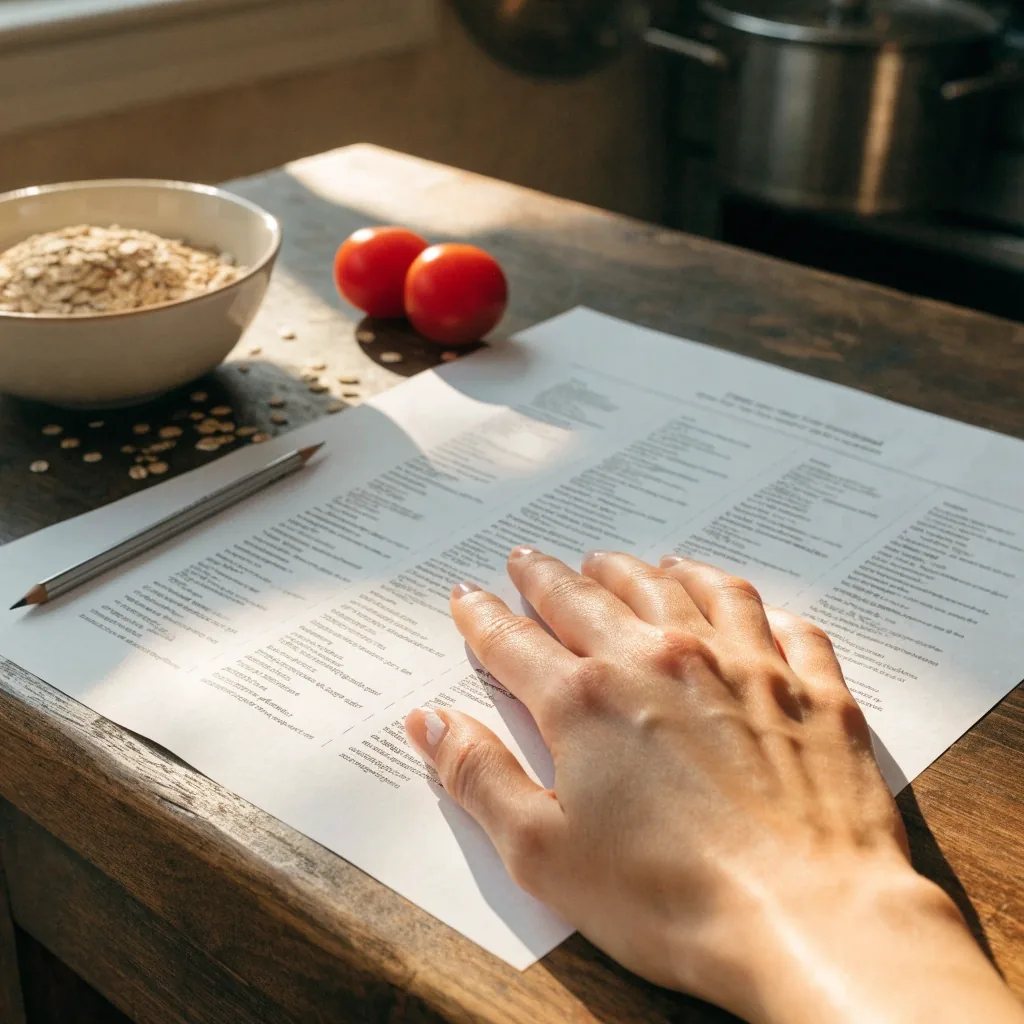
Follow-up is where most of the change happens. Between sessions you keep a food diary, and the review compares what was planned with what actually happened — without judgement, and with attention to the specific points where it broke down. This is prehranski coaching in the practical sense: adjusting the plan to the person, repeatedly, until it fits.
-
Where the week matched the plan, we keep it. Repeating what worked beats inventing something new.
-
Where it broke, we look at the cause: a late shift, an empty fridge, a meal nobody at the table enjoyed.
-
Small problems get caught while they are still small, before they turn into reasons to quit.
A plan that survives a birthday and a bad week
Trajnostne spremembe, meaning change that holds, is the whole point. There is no deadline attached to any plan and no promised result by a promised date. What there is: a documented starting point, regular reviews, and adjustments based on what your own records show.
Your written diary from week one stays the reference. Later reviews measure against it, not against an ideal menu.
Roughly monthly for most clients, sooner if the first two weeks demand a rewrite.
Adjustments follow what you wrote down, so the plan changes on evidence rather than on a hunch.
How often plans are revised
Expect the first revision within two to four weeks, based on your report of what worked. After that, revisions tend to arrive with each follow-up session — roughly monthly for most clients.
Plans also change for reasons outside the kitchen: a new job, a move, a training goal, a medical change. Tell us when life shifts and the plan shifts with it.
How an Online Consultation WorksTell us what changed — a new shift pattern, a move, a training goal, a medical update.
TriggerWe read your diary entries from that stretch and note the meals that no longer fit the week.
ReadThe plan is rewritten around the new constraint and sent by email within a few working days.
RewriteAt the next session we check whether the rewrite held, and keep only what did.
CheckTesting suspected food intolerances
When an intolerance is suspected, the meal plan becomes a structured test. One suspected trigger is adjusted at a time, with symptoms recorded alongside food for a defined period, and a clear decision point at the end. It is slower than cutting everything out at once and considerably more useful. Most people finish with a shorter list of foods to avoid than they expected, and a much better idea of which ones actually matter. If a symptom points beyond food, we say so and suggest you raise it with your doctor.
Family meals and eating out
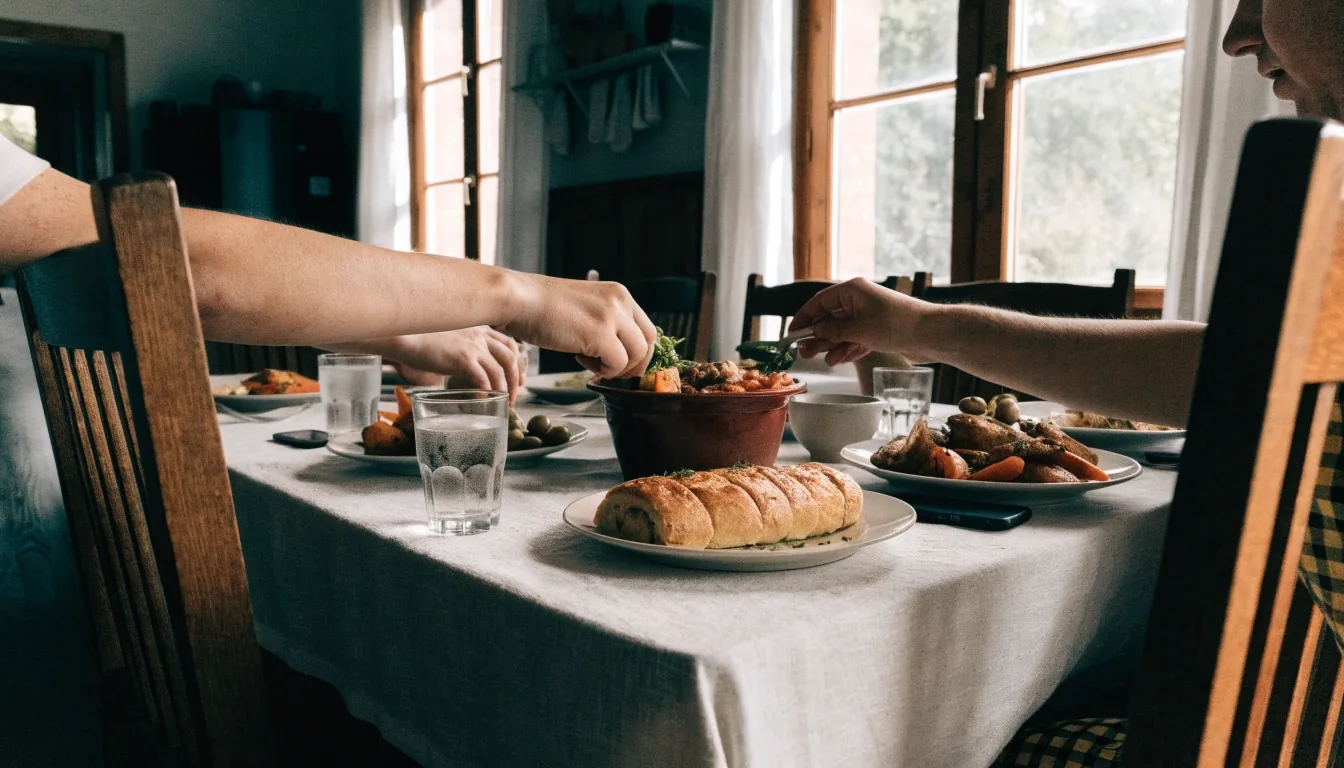
Eating is social in Slovenia as much as anywhere, and a plan that rules out Sunday lunch with family is not a plan. The approach is to work out where flexibility costs nothing and where it matters, then protect the parts that matter.
Practical guidance covers restaurant menus, potica at a celebration, and the difference between a planned indulgence and an unplanned slide. Both happen. Only one needs a response the following morning.
-
Restaurants
How to read a menu and pick without turning dinner into a negotiation.
-
Celebrations
Birthdays and holidays are planned for, not survived.
-
Work lunches
What to keep in a desk drawer and what to order when there is no kitchen.
-
Travel
A short list of meals that work in airports, hotels and other people's kitchens.
What you receive and when
After each session you get a written summary and, where relevant, an updated meal plan by email within a few working days. The plan is yours to keep and to annotate — some clients write straight onto it, others keep a separate notebook. Either is fine.
If something in it does not work, say so at the next session rather than quietly abandoning it. A plan nobody follows is useful information, not a failure — it tells us which part of the week we misread.
Questions people ask about their plan
01 How long until I get my first meal plan?
Usually within a few working days of the first session. The draft depends on your food diary, so the sooner the diary covers a normal week — including the bad days — the more useful the first version is.
02 Do I need to give up the foods I like?
No. Foods you refuse to eat are treated as fixed parameters. The plan is built around them, and work happens on portions, timing and what sits next to them on the plate.
03 What if the plan does not fit my week?
That is exactly what the follow-up is for. Bring the diary as it is — the meals you skipped included — and the next draft is written around the week you actually live, not the one you meant to have.
04 Can you cook for a family, not just for me?
Yes. If you cook for a household, the plan covers the whole table. Where one person needs a different portion or a different side, that is noted in the same meal rather than split into two dinners.
Meal plans and nutrition coaching here are educational and supportive. They are not a medical treatment, and they do not replace advice from your doctor or another qualified professional.
Start with the week you already have
Bring a few days of honest notes and we will build the first draft from them. Consultations run online Monday to Friday, 9:00 AM to 6:00 PM. If you would rather ask a question about meal planning first, that is a perfectly good way to begin.
Fatigue-Free Body
Stanetova ulica 8
3000 Celje, Slovenia
+386 3 428 7310
[email protected]
Monday to Friday, 9:00 AM – 6:00 PM